We’ve all been part of great teams…and some not-so-great. As a new leader, you have the opportunity to shape what kind of team you build. The good news? You can create a culture where employees feel valued, supported, challenged and motivated to do their best work. This means success for both your team and your organization.
Of course, stepping into leadership also comes with new demands and expectations. It can feel like a lot to balance at times. That’s why it’s essential to have a few core fundamentals in your toolkit; practices that help you lead with confidence, foster trust, and create lasting impact in today’s fast-paced business environment.
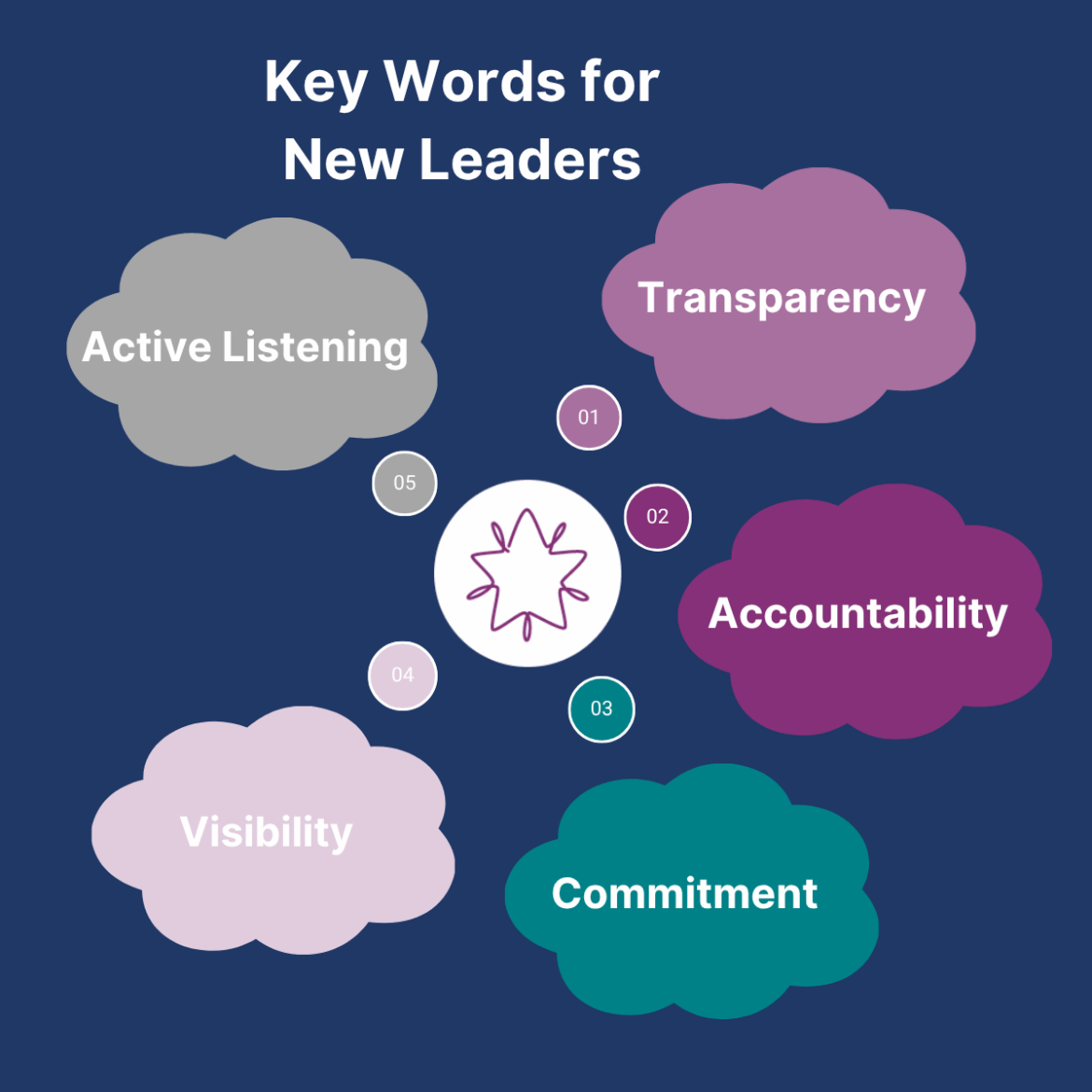
Let’s look at five key words…
and the opportunities and challenges each can present, to help you lead others with success!
Transparency – definition: being open and honest with information related to business operations
- The key here is disclosure of positives, challenges and future plans. Transparency builds trust amongst employees, fostering a team environment that is invested in mutual success.
- The risk is that partial transparency can create miscommunication, false information and survival-first mentality. These factors break down productivity, create silos and can breed sabotaging behavior.
Accountability – definition: accepting the consequences of actions and decisions
- The key here is accountability for your actions, your team’s actions and the decisions that contribute to the larger organizational momentum. Reliance that each team member is performing their job will raise the whole collective’s effectiveness.
- The risk in allowing too much leeway in individual accountability can cause a team to drift from the organization’s strategic objectives and foster actions that are based on personal priorities.
Commitment – definition: personally investing in a shared goal for an improved future state
- The key here is mutual buy-in from employees and leadership to guide actions and drive decisions that will make the organization’s goals a reality.
- The risk of assuming that employees are only interested in a paycheck and not capable of managing roadblocks across levels can reinforce a lack of belief in individual problem-solving capabilities.
Visibility – definition: the ability to have a clear understanding and knowledge of each team member’s role and impact on the unit
- The key here is recognizing and leveraging employee strengths to accomplish a project as a team unit while showcasing individual talents that contributed to the group’s overall success.
- The risk is funneling tasks through as leadership-driven exclusively can create an undervalued sentiment amongst employees and potentially encourage withdrawal.
Active Listening – definition: making a conscious effort to hear and understand someone else
- The key here is deeply focus on what your employee is saying to you to ensure you are understanding the entire context, which demonstrates interest and value to others’ ideas.
- The risk is jumping in to give advice or direction could send a message that employee’s observations are not relevant or that your thoughts are valued as more significant.
Remember, as a new or emerging leader, how you show up in your role will provide valuable guidance for your team. Your investment in creating a culture that reinforces value, trust, and collaboration will contribute to positive team dynamics. The environment will not only benefit your team, but the organization’s overall success.
I’d love to hear your thoughts! You can message me on LinkedIn or via email at shawn.smith546@outlook.com